

You know the feeling. Most of us have experienced it at some point. A strange symptom appears out of nowhere, maybe a persistent headache or an odd flutter in your chest, and within minutes you are deep in a search engine reading about rare diseases you cannot pronounce. Your anxiety spikes. Every new result seems worse than the last. By the time you close your browser, you are half convinced you have something fatal, when in reality it is probably just dehydration or stress. The fundamental problem with searching for health information online is that a search engine is essentially a library with no librarian. It contains all the books, every medical journal, every forum post, every symptom checker, but it cannot tell you which ones are relevant to your specific situation, which sources are trustworthy, or how to weigh conflicting information. It gives you everything and helps you with nothing.
Let me tell you, So I think As a physician, I have watched this dynamic play out thousands of times in my practice. Patients arrive at appointments already anxious from their own research, sometimes with dangerously incorrect self-diagnoses that took root because the internet presented terrifying possibilities alongside mundane ones with equal confidence. But my frustration with the system went deeper than patient anxiety. I was burning out, and not from the medicine itself, which I still love deeply, but from the crushing weight of administrative work that seems to multiply every year. Documentation requirements, electronic health record data entry, prior authorization paperwork, referral coordination. I felt more like a stenographer than a physician. The average doctor now spends nearly two hours on paperwork and electronic records for every one hour of direct patient care. That ratio is broken, and it is driving good doctors out of the profession.
Honestly, So when our hospital administration announced we were implementing an AI agent to assist with patient intake and preliminary symptom collection, my first reaction was deep skepticism. It sounded like yet another layer of technology between me and my patients, another box to click, another system to learn. I imagined clunky chatbots asking scripted questions and generating useless reports that I would have to read through anyway. I was completely wrong. The AI agent we deployed, built using Assistlore’s no-code builder and embedded directly into our patient portal with a simple script tag, turned out to be the first clinical tool I have used that genuinely feels less like an administrative burden and more like a trusted colleague. One that listens carefully, asks intelligent follow-up questions, connects invisible dots across the patient’s history, and hands me a concise, clinically useful summary that actually makes me a better doctor.
A Smarter Conversation, Not Just a Form
Honestly So, what is this thing? It's not a robot doctor. It's an intelligent conversational tool that patients interact with before they even see me. And the keyword there is 'conversation'.
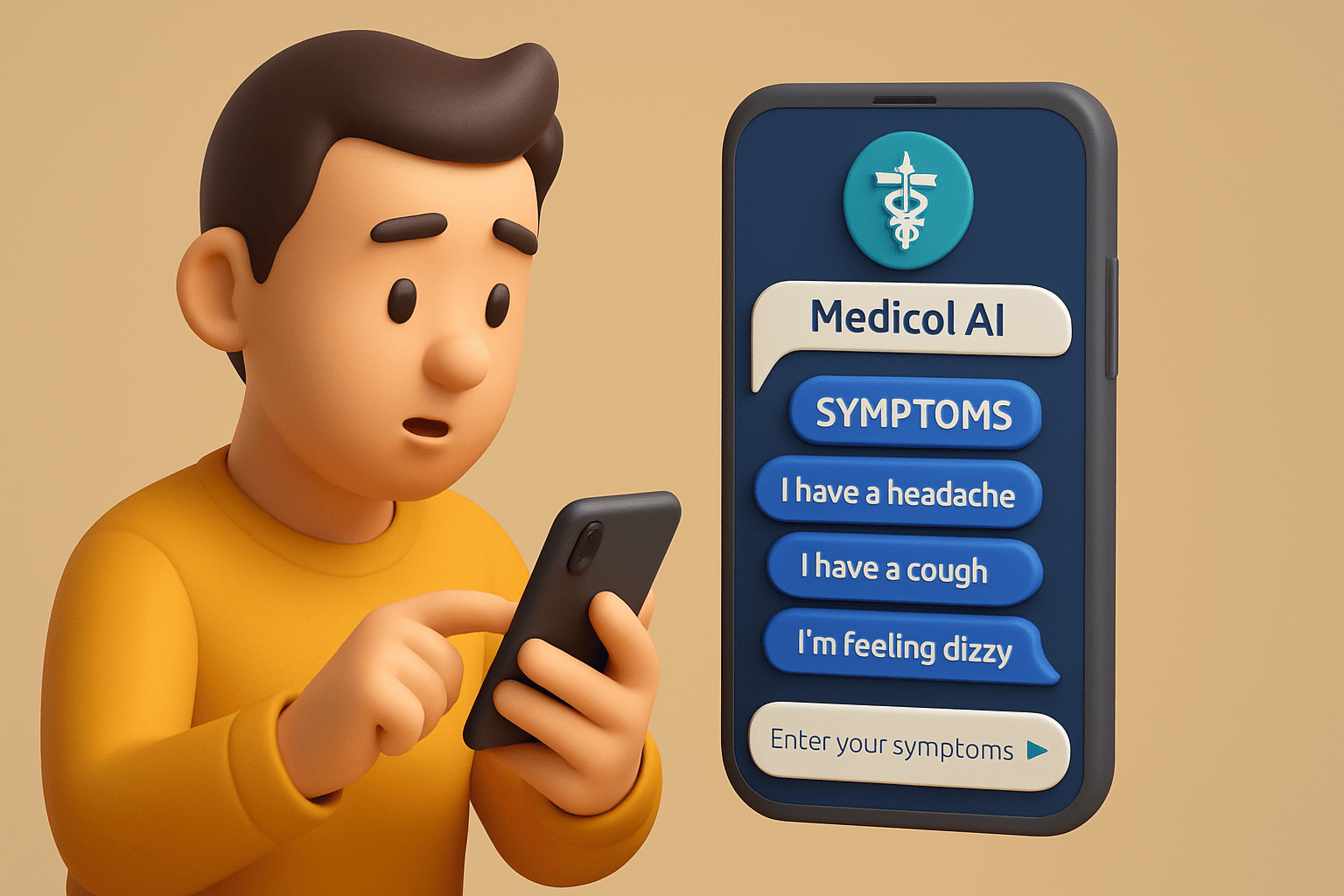
You know Instead of a static online form with a hundred checkboxes, the AI engages. It starts simply:
AI: "I hear you're dealing with a headache. I'm sorry to hear that. Can you tell me a little more about what it feels like?"
I think I think Let me tell you, The patient might say, "It's like a tight band around my head." The AI understands that phrase. It knows that's different from a "sharp, stabbing pain behind one eye." Based on that answer, it asks its next question. It adapts. It's less of an interrogation and more of a guided story, told by the patient.
Connecting the Invisible Dots
Here's where my skepticism started to melt. As the AI is 'listening' to the patient's story, it's also quietly, securely looking at the information I already have. It's connecting invisible dots.
So I think It sees the patient's description of a "tight band," and simultaneously notes the lack of a migraine history in their chart. It might see a lab result from two years ago showing normal blood pressure. It cross-references the patient's current medications to see if headaches are a side effect. It does in seconds what would take me 15 minutes of digging through records.
I think Then, it puts together what we call a 'differential diagnosis'—basically, a list of suspects. For the headache patient, it might list "Tension Headache" as Suspect #1, with 85% probability. "Sinus Headache" might be #2 at 10%. And that scary brain tumor? It's on the list, but way down at #17 with a probability of 0.01%, along with the reasons why it's so unlikely. It's like the world's best medical resident has already done the prep work for me.
"It’s funny, the AI asked me a question about my sleep that I hadn’t even thought was related. Turns out, it was the key. It felt like someone was actually listening." - Patient Feedback
The Ten Minutes That Matter
Honestly, Now, the most important part. I walk into the exam room. Before, I'd have a blank slate and a stressed-out patient. Now, I have a beautifully organized summary on my screen. I already know the story. The AI did the 'what'. Now I can focus on the 'why'.
Let me tell you, I don’t have to ask, "Where does it hurt?" I can ask, "Tell me about the stress at work you mentioned." I don't have to type furiously while they talk. I can put my keyboard down. I can make eye contact. I can be a human being.
So The AI presented the data, but my job is to add the wisdom. To perform the physical exam, to notice the patient's body language, to offer reassurance. The AI can suggest a diagnosis, but I'm the one who makes it. This technology isn't taking my job; it's giving me back the best parts of it.
Beyond the Exam Room: Broader Applications
The impact of AI agents in medicine extends well beyond the individual patient encounter. At the organizational level, these tools transform how healthcare systems operate. Emergency departments use AI agents to triage patients more accurately, reducing wait times for those who need immediate care and directing less urgent cases to appropriate resources. Primary care practices deploy them for pre-visit intake, gathering complete symptom histories that allow physicians to walk into appointments fully prepared.
Mental health represents another frontier where AI agents are making a meaningful difference. Patients experiencing anxiety or depression often find it easier to open up to an AI initially, describing their symptoms without the social pressure of face-to-face interaction. The agent can then compile this information into a structured summary that helps the mental health professional begin productive conversations immediately, rather than spending the first twenty minutes of a session gathering basic information.
Chronic disease management is yet another area where continuous AI support adds tremendous value. Patients with diabetes, hypertension, or heart disease need ongoing monitoring and education. An AI agent can check in with these patients regularly, track their symptoms and medication adherence, flag concerning trends, and provide evidence-based guidance on lifestyle modifications. This kind of persistent, personalized support improves outcomes and reduces the frequency of costly emergency interventions.
Assistlore's platform makes all of these applications accessible to healthcare providers of any size. The no-code builder means a small family practice can deploy a patient intake agent without hiring a team of developers. The real-time crawling capability ensures the agent always has access to the latest clinical guidelines and practice policies. The embed script tag allows smooth integration with existing patient portals and electronic health record systems. And the analytics dashboard provides administrators with clear data on patient satisfaction, intake efficiency, and areas where additional support is needed.
Building Patient Trust Through Transparency
One concern that naturally arises with AI in healthcare is trust. Patients want to know that their sensitive health information is handled responsibly and that the AI is not making autonomous decisions about their care. The best implementations of medical AI agents address this head-on through complete transparency about the technology's role and limitations.
A well-configured AI agent clearly communicates that it is an information-gathering and organization tool, not a replacement for the physician's clinical judgment. It explains what data it collects, how that data is used, and how it protects patient privacy. It knows when to escalate to a human, never making definitive diagnostic claims on its own. This transparency builds trust rather than eroding it, and patients consistently report higher satisfaction with practices that use AI thoughtfully compared to those that either avoid it entirely or deploy it without clear communication.
This Isn't Sci-Fi. It's Just Better Medicine.
Honestly, I think I still have long days. Medicine will always be hard. But for the first time in a long time, I feel a sense of relief. The crushing weight of administrative work is a little lighter. I feel less like a cog in a machine and more like a doctor again.
You know This isn't about a robot takeover. It's about a partnership. It's a tool that filters the noise so I can hear the music. And for my patients, it means getting a more focused, more empathetic, and Also more human doctor. And I can't think of a better diagnosis than that.